

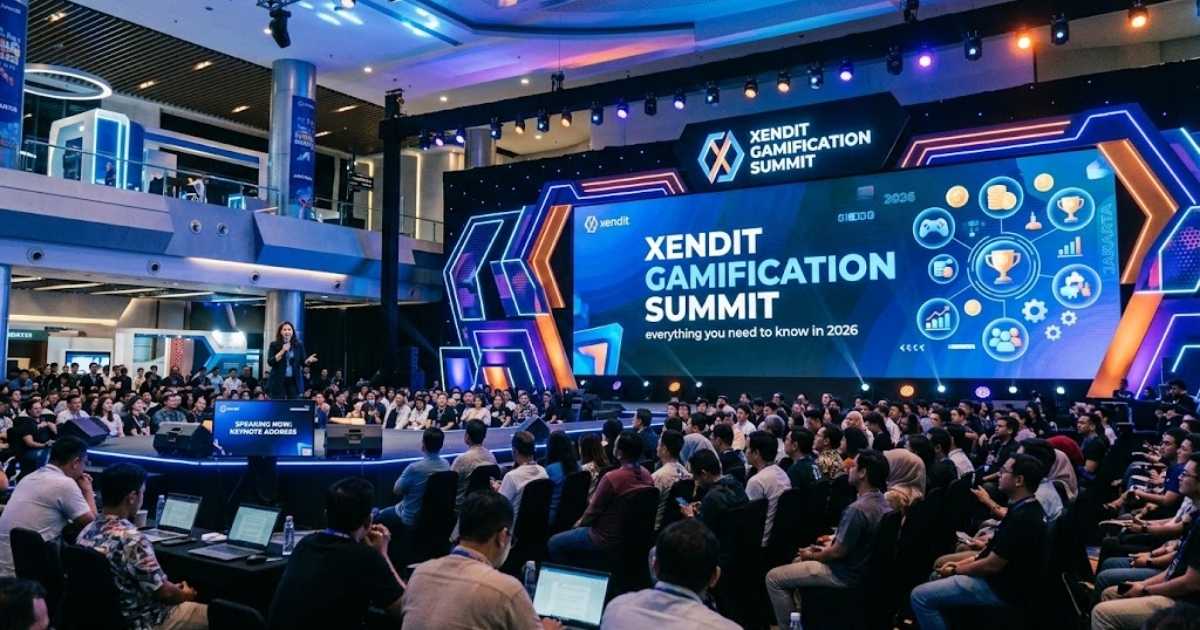
Employee engagement is changing fast. Annual bonuses and yearly reviews no longer hold people’s attention. Companies now need daily, visible ways to keep teams motivated. Xendit Gamification Summit Work is one framework getting attention in this space. It applies game design principles, like points, progress bars, and team challenges, to everyday work tasks.
This guide breaks down what the concept means, how a workplace gamification framework like this gets built, and what other organizations can learn from it. Transparency note: Xendit is a real, well-documented Southeast Asian fintech company. Specific internal details of a “Gamification Summit Work” program are not independently verified through official press releases or public case studies. This article treats the concept as an illustrative model, grounded in established behavioral science and real gamification research, so you get practical value regardless of the source.
Bio Table
| Quick Facts | Details |
| Concept | Xendit Gamification Summit Work |
| Associated company | Xendit (Southeast Asia fintech) |
| Core discipline | Workplace gamification, behavioral psychology |
| Primary goal | Employee engagement and retention |
| Key mechanics | Points, badges, quests, progress tracking |
| Verification status | Concept widely discussed online; specific program details unverified |
| Best suited for | HR teams, startups, remote and hybrid teams |
| Relevant theory | Self-Determination Theory (autonomy, mastery, connection) |
The Challenge: Why Traditional Employee Engagement Was No Longer Enough
For years, businesses relied on annual awards, surveys, and occasional team events. These tools worked when office culture created natural daily interaction.
Remote and hybrid work changed that. Hallway conversations disappeared. Managers found it harder to spot disengagement before it became turnover.
Common warning signs organizations noticed:
- Declining participation in optional company initiatives
- Lower training completion rates
- Employees completing tasks without visible connection to company goals
- Rising burnout that wasn’t caught early
- Recognition that felt inconsistent or delayed
Fintech companies face this pressure sharply. Talent is mobile, switching jobs is easy, and competition for skilled workers is constant. Engagement stopped being a soft perk and became a retention strategy with real financial stakes.
See Also: Compass Mobile Dollar Tree Login Guide 2026: Access Your Employee Account
What Exactly Is Xendit Gamification Summit Work?
At its core, this is a workplace engagement model that applies game mechanics to real job responsibilities. It is not about turning work into entertainment.
Instead, it uses proven motivational principles: visible progress, timely feedback, and meaningful recognition. Employees complete real tasks and see that effort reflected in a structured system.
The “Summit” metaphor represents upward growth. Employees move forward by completing meaningful work, developing skills, and supporting teammates. Every milestone represents progress toward a clear, shared goal.
Three ideas separate this from a simple points scheme:
- Intrinsic motivation first. Rewards support autonomy, mastery, and connection rather than replacing them.
- Team-based design. Challenges often require cross-team collaboration, not solo competition.
- Business alignment. Every game mechanic maps to a real KPI, like onboarding speed or support response time.
See Also: Newstown CraigScott Capital: Full Background, Risks, and Investor Guide 2026
Setting Clear Goals and Success Metrics from Day One
Gamification without measurable goals becomes a novelty that fades in weeks. Successful frameworks start with a short list of business problems, not a wish list of features.
A workable starting checklist:
- Identify one or two measurable pain points (slow onboarding, low training completion, inconsistent recognition)
- Set a single primary metric per pilot
- Define a clear time window for testing (one to four weeks)
- Choose a control group where possible
- Agree on what “success” looks like before launch
| Goal Area | Example Metric | Typical Target Range |
| Onboarding | Completion rate | +10 to 20% |
| Support operations | Average handle time | -5 to 15% |
| Training | Course completion rate | +15 to 30% |
| Collaboration | Cross-team quest participation | +20% quarter over quarter |
| Retention | Voluntary turnover rate | -3 to 8% year over year |
Keeping the metric list short avoids one common failure: tracking so many numbers that no one acts on any of them.
Designing the Gamification Framework: Strategy and Unique Angles
A strong framework blends four building blocks:
- Employee engagement platform for tracking activity
- Recognition system for visible, timely praise
- Progress mechanics like bars, tiers, or streaks
- Collaborative challenges that require teamwork
The unique angle in a summit-style model is the emphasis on shared progress over individual ranking. Leaderboards alone tend to demotivate the majority of employees who never reach the top spot.
Instead, teams unlock rewards together. Product and engineering groups, for example, might unlock a milestone by hitting delivery targets with low defect rates. This keeps competition friendly and outcome-focused rather than personal.
Step-by-Step Implementation Roadmap
Rolling out a gamification framework works best in stages, not one large launch.
- Diagnose the problem. Interview managers and review existing engagement or performance data.
- Pick one pilot. Choose a single team or workflow, not the whole company.
- Design the mechanic. Match the reward type to the behavior you want (progress bars for completion, badges for milestones).
- Set the metric and timeline. One primary KPI, tracked over one to four weeks.
- Launch with a feature flag. This allows the mechanic to be toggled off quickly if it underperforms.
- Collect feedback continuously. Short pulse surveys work better than long annual ones.
- Scale what works. Expand successful pilots to adjacent teams before rolling out company-wide.
This staged approach limits risk. A failed pilot affects one team for a few weeks, not the entire organization for a year.
Core Mechanics That Made Daily Work Feel Like a Summit
The daily experience is where a framework succeeds or fails. Mechanics need to feel natural, not like an extra app to check.
Common mechanics include:
- Points for completing strategic tasks, mentoring, or learning sessions
- Achievement badges for milestones like onboarding excellence or innovation contributions
- Streak bonuses that reward consistency over time
- Weekly missions that refresh regularly to avoid repetition
- Cross-team quests that require two or more departments to collaborate
Small, frequent wins matter more than large, rare ones. Psychological momentum builds when people see progress every few days, not once a quarter.
Technology Stack and Tools That Powered the Program
Gamification frameworks depend on integration. If employees need to open a separate app constantly, adoption drops fast.
A typical stack includes:
| Layer | Purpose | Example Tool Type |
| Communication | Where recognition appears | Slack, Microsoft Teams |
| HR platform | Tracks participation and rewards | HRIS with engagement modules |
| Analytics dashboard | Visualizes participation and outcomes | BI or engagement analytics tool |
| Automation | Triggers badges and notifications | Workflow automation tool |
| Recognition layer | Delivers redeemable rewards | Digital recognition platform |
The goal is invisibility. The best systems sit inside tools employees already use every day, rather than adding a new destination.
Measuring Results: Data, Stories, and Unexpected Wins
Numbers tell part of the story. Employee stories and unprompted feedback fill in the rest.
Typical categories of measurable impact:
- Participation rate: how many employees engage weekly
- Reward redemption rate: how many earned rewards get claimed
- Employee Net Promoter Score (eNPS): willingness to recommend the workplace
- Training completion: speed and depth of skill development
- Operational metrics: onboarding completion, support handle time, defect rates
Unexpected wins often show up outside the original goal. Remote teams frequently report stronger peer relationships, since shared quests create interaction that would not otherwise happen. That emotional layer is harder to measure but strongly connected to long-term retention.
See Also: Geekzilla Tio Geek Explained: Why Everyone Is Talking About It in 2026
Challenges We Faced and How We Solved Them
No gamification rollout is friction-free. The most common obstacles and fixes:
| Challenge | Likely Cause | Practical Fix |
| Some employees ignore the system | No perceived value in rewards | Ask what recognition actually motivates them |
| Excitement fades after a few weeks | Repetitive challenges | Rotate missions regularly |
| Certain teams engage more than others | Mechanics don’t fit their workflow | Customize challenges per department |
| Leaderboards cause stress | Individual ranking feels punitive | Shift to team-based unlocks |
| Metrics become vanity numbers | Too many KPIs tracked | Limit to one or two per pilot |
Continuous feedback loops solve most of these issues faster than a full redesign. Small adjustments, made often, outperform large annual overhauls.
Key Lessons and Best Practices for Other Companies
A few principles apply regardless of company size or industry:
- Solve a real problem first. Points without a purpose do not create engagement.
- Balance intrinsic and extrinsic rewards. Recognition and growth opportunities often motivate more than cash bonuses.
- Keep systems simple. Complex point structures create friction instead of excitement.
- Prioritize fairness. Different roles contribute differently, so reward design must reflect that.
- Let employees shape the system. Feedback-driven iteration keeps programs relevant over time.
- Start small. A single pilot with one clear metric beats a company-wide launch with unclear goals.
Startups and small businesses can apply the same logic with lighter tools: a basic points system, simple badges, and consistent public recognition are enough to start.
The Future of Xendit Gamification Summit Work
Workplace gamification is shifting toward personalization. AI-driven systems can now tailor challenges and rewards to individual work patterns instead of applying one model to everyone.
Expect these trends to grow:
- AI-powered recommendation engines suggesting personalized challenges
- Real-time dashboards replacing quarterly engagement reports
- Deeper integration between gamification tools and existing workflow software
- Greater emphasis on well-being metrics alongside productivity metrics
The core idea remains steady even as tools evolve: make progress visible, keep recognition timely, and align every mechanic with real business goals.
Frequently Asked Questions
What is Xendit Gamification Summit Work?
It is a workplace engagement concept that applies game mechanics like points, badges, and progress tracking to daily work tasks and team goals.
Is Xendit Gamification Summit Work an official Xendit program?
Specific program details are not independently verified through official sources, so treat it as an illustrative framework based on real gamification principles.
Does gamification actually improve employee engagement?
Yes, when designed around genuine business problems and intrinsic motivation, gamification consistently improves participation and satisfaction scores.
What tools are needed to start a gamification program?
A communication platform, an HR or engagement tracking tool, and a simple recognition system are enough to launch a basic pilot.
How long should a gamification pilot run before evaluating results?
Most pilots run one to four weeks with a single primary metric, which is enough time to see meaningful early signals.
Can small businesses use this type of framework?
Yes, a lightweight points system with badges and public recognition works well for smaller teams without heavy investment.
What is the biggest mistake companies make with workplace gamification?
Tracking too many metrics or relying on individual leaderboards, both of which reduce fairness and long-term motivation.
Conclusion
Xendit Gamification Summit Work represents a broader shift in how companies think about employee engagement. The underlying principles, visible progress, timely recognition, and team-based challenges, are backed by real behavioral science, even where specific program details remain unverified.
Any organization can apply this thinking. Start with one clear problem, one pilot team, and one measurable goal. Build from there, and let employee feedback guide what comes next.